Life Without Limitations
Solutions
Prosthetic Leg Solutions
Choosing the right prosthetic leg solution for you can feel overwhelming with so much information available. That's why at ForMotion Clinic, we guide you through every step to help you make an informed decision.
Our experienced prosthetists work closely with you to understand your goals, assess your mobility, strength and evaluate your functional potential. Together, we’ll create a personalised solution designed to help you achieve the best poss...
Read more
Lower Limb Prosthetic Services
Who Needs a Prosthetic Leg?
A prosthetic leg can benefit individuals who have experienced limb loss due to:
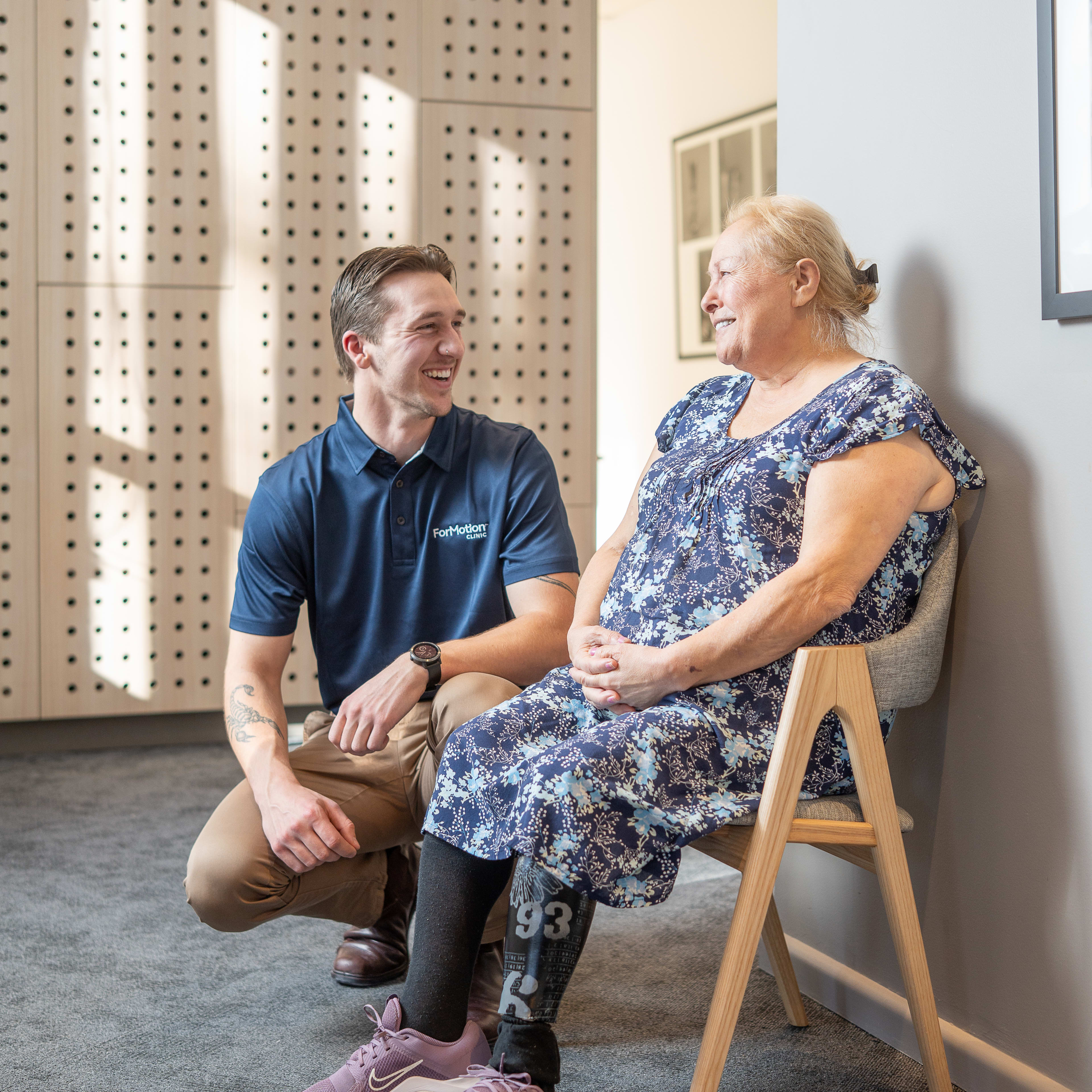
Whether you’re pursuing an active lifestyle or using a prosthetic leg primarily for transfers, using a prosthesis takes determination and effort. Walking, sitting and standing with a prosthesis requires more energy and concentration compared to those without limb loss. But don’t let that deter you! Our team collaborates with physiotherapists and/or occupational therapists (OT’s) to ensure you are strong, confident and capable of doing everything you want with your prosthetic leg. We continuously review and will adjust your prosthetic prescription as your abilities and goals evolve.
See how we work with a multidisciplinary team (MDT) and other support services to help you get where you want to be!
- Trauma or injury
- Diabetes or vascular disease
- Cancer
- Congenital limb difference (being born with a limb difference)
Whether you’re pursuing an active lifestyle or using a prosthetic leg primarily for transfers, using a prosthesis takes determination and effort. Walking, sitting and standing with a prosthesis requires more energy and concentration compared to those without limb loss. But don’t let that deter you! Our team collaborates with physiotherapists and/or occupational therapists (OT’s) to ensure you are strong, confident and capable of doing everything you want with your prosthetic leg. We continuously review and will adjust your prosthetic prescription as your abilities and goals evolve.
See how we work with a multidisciplinary team (MDT) and other support services to help you get where you want to be!
Prosthetic types
Types of prosthetic legs
There are two main categories of prosthetic legs depending on whether you need an above-knee (transfemoral) or below-knee (transtibial) device. Here's a guide to the prosthetic leg solutions we offer - locate your level of amputation or limb difference to learn more.
Talk to your prosthetist if there are specific activities or movements your current prosthesis doesn't support, as you may need a specialty device.
Talk to your prosthetist if there are specific activities or movements your current prosthesis doesn't support, as you may need a specialty device.
Below knee prosthesis
For amputations below the knee joint (transtibial). Because the knee is intact, this allows for greater mobility and a wider range of prosthetic foot and ankle options. These are among the most commonly fitted prostheses.
Through knee prosthesis
For amputations at the knee joint (knee disarticulation). The thigh bone remains intact, providing a longer lever arm for better control of the prosthesis and improved sitting balance.
Above knee prosthesis
For amputations above the knee joint (transfemoral). These require both a prosthetic knee unit and a foot, making fitting and rehabilitation more involved. Our team works closely with you to find the right combination for your lifestyle.
Through hip prosthesis
For amputations at or through the hip joint (hip disarticulation). These require a full prosthetic leg including hip, knee, and foot components and are custom-fitted to each individual.
Partial foot prosthesis
For partial foot amputations. These devices restore foot shape and function, assisting with balance, weight distribution, and walking gait.
Limb difference prosthesis
For those born with a congenital limb difference. Fitting and design is tailored to the individual's unique anatomy and developmental stage, with a focus on function, comfort, and confidence.
FAQ
Frequently asked questions
We've compiled answers to the most commonly asked questions about our clinic, services, and procedures.
What is the process of getting a prosthetic leg?
A functional assessment and prescription will first be conducted by your prosthetist and health care team. Once funding approval has been granted, we can begin the manufacturing process. The process will vary for everyone - including the number of appointments needed and the number of trial sockets required.
Is it hard to walk with a prosthetic leg?
Walking with a prosthesis takes determination and effort. It requires more energy and concentration compared to walking without limb loss. Our team works alongside physiotherapists and occupational therapists (OTs) to ensure you are strong, confident, and capable. We continuously review and adjust your prescription as your abilities and goals evolve.
How long does a prosthetic leg last?
Your limb, along with your life and goals, will change over time - and that's okay. We are here to adapt with you. If you notice changes in your limb or body, talk to your prosthetist and we'll work alongside you to adjust your prosthesis accordingly.
How do prosthetic legs work?
A prosthetic leg is a custom-designed device that replaces the function and appearance of a missing limb. It consists of a prosthetic socket, suspension system, componentry, prosthetic foot, and optional cosmesis - all selected and tailored to suit your individual needs and goals.
Locations
Find Your ForMotion Clinic
We have an established and growing network of clinics and care specialists. Find the location that's closest to you.